
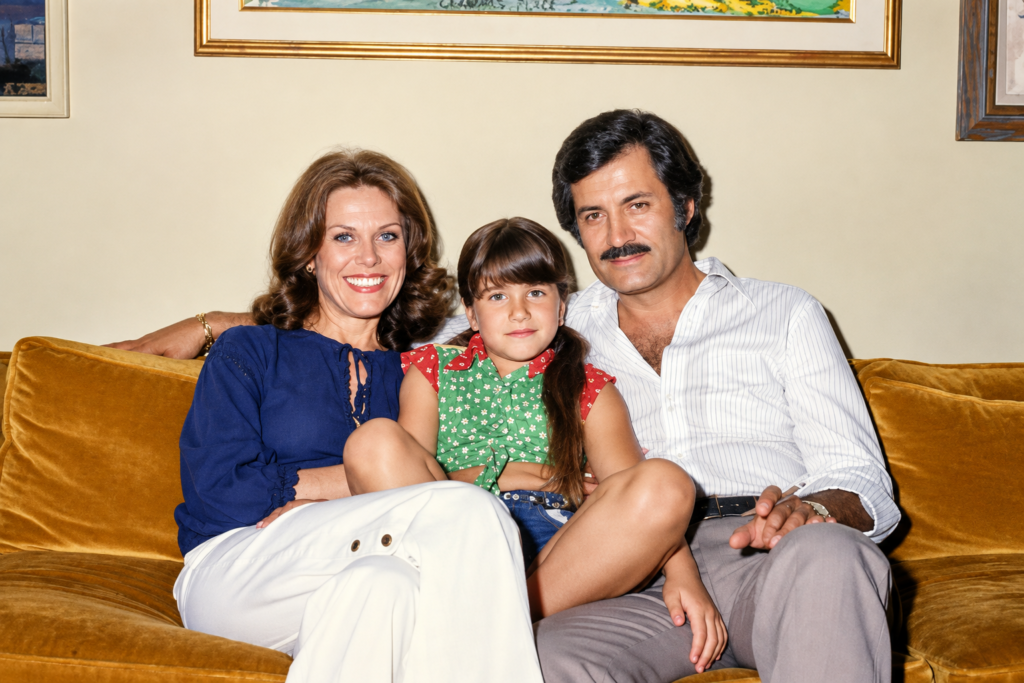

Jennifer Aniston has spent decades in the spotlight, but one question continues to interest fans around the world: does Jennifer Aniston have kids? Known for her iconic role as Rachel Green on Friends, her successful film career, and her long-standing presence in Hollywood, Aniston has often found her personal life discussed as much as her professional achievements.
The answer is straightforward: Jennifer Aniston does not have any children, either biological or adopted, as of October 2026. However, the story behind this fact is more personal than many headlines have suggested. The actress has spoken openly about her efforts to become a mother, the fertility treatments she pursued, and the pressure she experienced from years of public speculation.
Her experiences offer a more complete picture of a woman whose life cannot be defined by marriage or motherhood alone. In this article, we explore whether Jennifer Aniston has children, what she has shared about IVF, how her past relationships became part of the public conversation, and why she has challenged assumptions about women who do not have children.
Does Jennifer Aniston Have Kids?
No, Jennifer Aniston does not have children. The actress has never publicly announced the birth or adoption of a child, and she has spoken candidly about her unsuccessful attempts to become pregnant.
Aniston has been married twice. Her first marriage was to actor Brad Pitt, and her second was to actor and screenwriter Justin Theroux. Neither marriage resulted in children.
For years, entertainment headlines speculated about whether she would become a mother. Some stories suggested that her career influenced her decision, while others connected her personal life to her divorce from Pitt. Aniston later explained that these assumptions overlooked the private fertility struggles she had experienced.
In her 2022 interview with Allure, she revealed that she had undergone in vitro fertilization (IVF) while trying to conceive. Her account challenged the idea that she had simply chosen her career over having a family.
The distinction matters: not having children does not necessarily mean someone never wanted them. Aniston’s own words make clear that her experience was more complicated than the simplified stories circulating in the media.
Jennifer Aniston’s Fertility Journey
Jennifer Aniston’s journey toward motherhood was deeply personal, and she kept much of it private while continuing to work in Hollywood.
Her experience trying to become pregnant
In November 2022, Aniston discussed her fertility journey in an interview with Allure. She explained that she had tried to become pregnant during her late 30s and 40s and described the process as challenging.
She also revealed that she had explored different approaches, including IVF and traditional Chinese remedies. Despite her efforts, she did not become pregnant.
Her disclosure was significant because the public had spent years speculating about pregnancies, relationships, and possible family plans without knowing what she was experiencing privately.
Aniston also reflected on wishing she had received advice about freezing her eggs earlier. This was a personal reflection on her experience, not a guarantee that egg freezing would have resulted in a successful pregnancy.
Her story highlights an important point: fertility journeys differ from person to person, and outcomes cannot be predicted simply from someone’s age, relationship status, or public image.
How she found peace with the outcome
Aniston said in 2022 that she had reached a point where she no longer felt caught in the uncertainty of wondering whether pregnancy might happen.
In later interviews, she continued discussing the emotional process of accepting that motherhood had not become part of her life.
In 2025, she described reaching a sense of peace after years of trying to conceive. She acknowledged that accepting the situation involved recognizing the limits of what she could control.
This does not mean that the experience was necessarily easy or that she never wondered what life might have been like with children. Rather, her comments suggest that acceptance became possible after a long and difficult period.
An important insight: Acceptance and sadness can exist alongside each other. Someone can make peace with an outcome while still acknowledging that the journey involved disappointment, uncertainty, or difficult emotions.
Did Jennifer Aniston Try IVF?
Yes. Jennifer Aniston publicly confirmed that she underwent IVF while trying to have a baby.
IVF, or in vitro fertilization, is a fertility treatment in which eggs are retrieved and fertilized with sperm in a laboratory. An embryo may then be transferred into the uterus in an attempt to establish a pregnancy.
Aniston described undergoing treatment during her late 30s and 40s. She also discussed trying other approaches while hoping to become a mother.
Her treatments were unsuccessful, according to her public account. She has not shared every medical detail, and there is no reason to speculate about information she has chosen to keep private.
Her experience also helps explain why assumptions about celebrity pregnancies can be misleading. A person may be navigating fertility treatment, pregnancy loss, medical uncertainty, or other private circumstances without discussing them publicly.
What her IVF experience teaches readers
There are several useful lessons to take from Aniston’s account:
- Fertility is personal. Two people of the same age may have very different experiences when trying to conceive.
- Treatment does not guarantee pregnancy. IVF can help some people become pregnant, but it is not successful in every case.
- Privacy deserves respect. Nobody is obligated to disclose medical information to explain why they do not have children.
- There is no single timeline for family life. Relationships, parenthood, and personal fulfillment do not follow one universal schedule.
Aniston’s experience should not be interpreted as medical advice. Anyone considering fertility treatment should discuss individual circumstances and available options with a qualified healthcare professional.
Why Doesn’t Jennifer Aniston Have Children?
There is no single explanation that fully captures Aniston’s experience. Based on her own public statements, she wanted to have a biological child and made efforts to conceive, but those attempts were unsuccessful.
She has rejected the suggestion that she remained childless simply because she was selfish or overly focused on her acting career.
In 2025, she addressed these assumptions again, explaining that people commenting on her personal life did not know about the years she had spent trying to start a family.
Her experience demonstrates why it is inaccurate to assign a simple motive to another person’s circumstances.
Did she choose her career over motherhood?
Aniston has pushed back against that narrative. In her 2022 interview, she explained that she had actually been trying to become pregnant while much of the speculation about her family life was circulating.
Her successful acting career and her fertility struggles were not mutually exclusive. She could continue working professionally while privately hoping to become a mother.
It is also worth remembering that outsiders rarely have enough information to understand the decisions and difficulties involved in someone else’s family life.
Rather than assuming that a successful woman does not want children, it is more accurate to recognize that her circumstances may be personal, complicated, or simply private.
Did Jennifer Aniston and Brad Pitt Have Children?
No, Jennifer Aniston and Brad Pitt did not have children together.
The actors married in July 2000 and separated in 2005. Their relationship attracted enormous public attention, and speculation about whether they would start a family became a recurring subject in entertainment coverage.
After their separation, some media narratives suggested that Pitt wanted children while Aniston did not. Aniston later rejected the claim that their marriage ended because she refused to have a child.
Her comments in the 2022 Allure interview directly challenged the long-running assumption that she had prioritized her career over motherhood.
The important distinction is between verified information and speculation. Their marriage ended, but claims about private motives should not be treated as established facts simply because they were repeated in headlines.
Why the rumors continued
Celebrity relationships often attract intense public interest, particularly when both partners are famous. Fans may become invested in the couple’s future and expect marriage to lead to children.
When that expectation is not fulfilled, rumors can fill the information gap.
Aniston’s experience illustrates how a private matter can become a public storyline even when the underlying facts are unknown. Her later disclosures provided important context, but they did not mean that the public was entitled to every detail of her personal life.
Did Jennifer Aniston and Justin Theroux Have Children?
No, Jennifer Aniston and Justin Theroux did not have children together.
Aniston and Theroux became engaged in 2012 and married in 2015. They announced their separation in 2018, describing their decision as mutual.
During their relationship, questions about pregnancy and motherhood continued to follow Aniston. In interviews, she objected to the pressure placed on women to marry and have children according to a socially expected timetable.
Her comments from that period are particularly relevant because they challenge the idea that a person’s life must include specific milestones to be considered complete.
A relationship can be meaningful without producing children, and a marriage ending does not automatically explain someone’s fertility history or personal wishes.
Aniston’s later account of IVF also showed why public assumptions about her relationships had failed to capture the full story.
Has Jennifer Aniston Ever Considered Adoption?
In a 2025 conversation on the Armchair Expert podcast, Aniston explained that adoption was not the path she wanted to pursue.
She said that she had wanted a biological child and that having a child with her own genetic connection had been important to her.
Her comments clarified a question that had followed her fertility disclosures: why not adopt after unsuccessful fertility treatment?
The answer, according to Aniston, was that adoption did not align with what she personally wanted. That was her individual decision, not a statement about the value of adoption or the families formed through it.
People approach parenthood differently. Some pursue fertility treatment, some adopt, some choose other routes to family life, and others eventually decide to live without children. There is no need to assume that one route is right for everyone.
Aniston’s openness also demonstrates that wanting a child and choosing a particular path to parenthood are separate matters.
How Jennifer Aniston Responded to Public Pressure
For many years, Aniston faced recurring questions about pregnancy, marriage, and children. Even ordinary public appearances could trigger fresh speculation about whether she was expecting a baby.
In 2016, she published an essay challenging the media’s treatment of women’s bodies and the assumption that a woman’s worth depends on whether she is married or has children.
She returned to the subject in her 2018 interviews, explaining that people did not know what she had experienced medically or emotionally.
Her 2025 comments added further context by revealing more about her long fertility journey.
The effect of constant speculation
Repeated rumors can create a distorted impression of a person’s life. In Aniston’s case, public discussion often framed her as someone who either did not want children or had deliberately chosen work over family.
Her disclosures revealed that this simplified narrative did not reflect her experience.
There is a broader lesson here for readers and media audiences: a lack of public information is not evidence that someone has no emotional investment in a subject.
Questions about fertility can also be painful for people dealing with unsuccessful treatment, pregnancy loss, personal decisions, or circumstances they cannot control.
Her message about women’s worth
Aniston has repeatedly challenged the notion that women must become mothers to lead meaningful lives.
Her position does not require women to reject motherhood. Instead, it recognizes that motherhood is not the only measure of happiness, success, or personal fulfillment.
This perspective is relevant beyond celebrity culture. People often face pressure from relatives, friends, colleagues, and society to follow a particular life path.
Aniston’s experience encourages a more respectful approach: let people define their own lives rather than judging them against expectations they may not share.
Does Jennifer Aniston Have a Family Without Children?
Yes. Although Aniston does not have children of her own, family and close relationships remain part of her public life.
She has maintained long-standing friendships with people in the entertainment industry, including Adam Sandler and his wife, Jackie Sandler. In 2023, reports described how the couple sent Aniston flowers on Mother’s Day after learning about her fertility struggles.
The gesture illustrated how friends can offer support without assuming they know exactly how another person feels.
Aniston has also spoken warmly about close relationships throughout her career. Her life shows that family connections, friendship, companionship, and emotional support can take different forms.
However, it is important not to confuse being a caring friend with being a parent. Aniston has not claimed to have secretly raised children or to have an undisclosed family of her own.
A useful distinction: A person’s family life is broader than parenthood, but that does not make different relationships interchangeable. People can value their friends and relatives while still acknowledging their own feelings about not having children.
Jennifer Aniston Kids: Common Misconceptions
Several misconceptions have persisted because of years of tabloid speculation.
Misconception 1: She never wanted children
Her public account contradicts this simplified claim. She has explained that she tried to become pregnant and underwent IVF.
Misconception 2: Her divorce from Brad Pitt happened because she refused to have a baby
Aniston explicitly rejected this narrative. Speculation about the private reasons for a marriage ending should not be presented as fact.
Misconception 3: IVF would definitely have worked if she had started earlier
There is no basis for making that claim. Fertility outcomes depend on multiple factors, and no treatment can guarantee pregnancy.
Misconception 4: She must be unhappy because she does not have children
Aniston has spoken about the difficulty of her fertility journey as well as the peace she has found with its outcome. Outsiders cannot determine her overall happiness based solely on whether she is a parent.
Correcting these misconceptions creates a more accurate understanding of her story and encourages greater sensitivity toward other people facing similar questions.
FAQs About Jennifer Aniston’s Kids
1. How many kids does Jennifer Aniston have?
Jennifer Aniston has no children. She has not publicly announced having biological or adopted children. She has, however, spoken about trying to become a mother and undergoing unsuccessful IVF treatment.
2. Did Jennifer Aniston ever get pregnant?
Aniston has publicly discussed trying to conceive and undergoing IVF, but she has not announced a pregnancy resulting in a child. She has kept many details of her medical history private. It is best to rely on her own statements rather than unverified pregnancy rumors.
3. Why didn’t Jennifer Aniston have a baby with Brad Pitt?
Aniston and Pitt did not have children together. Aniston later rejected claims that their marriage ended because she refused to have a child. She also revealed that she had privately tried to become pregnant, making the simplified media narrative misleading.
4. Did Jennifer Aniston use IVF?
Yes. In a 2022 interview, Aniston confirmed that she underwent IVF while trying to conceive during her late 30s and 40s. The treatments were unsuccessful. She later discussed the emotional process of accepting that she would not become a mother through those efforts.
5. Why didn’t Jennifer Aniston adopt children?
In 2025, Aniston explained that adoption was not the right path for her because she had wanted a biological child. This was a personal preference and should not be interpreted as a judgment about adoption or adoptive families.
6. Is Jennifer Aniston happy without children?
Aniston has spoken about finding peace with how her life unfolded, although she has also acknowledged the emotional difficulty of her fertility journey. Her statements suggest that she has reached greater acceptance of circumstances outside her control. Only she can fully describe her feelings, and her family status alone cannot determine whether she is happy.
Conclusion
Jennifer Aniston’s story offers a more complete answer to the question of whether she has kids. As of October 2026, she has no children, but her experience was not simply a matter of choosing a career over motherhood.
Through her interviews, she has explained that she tried to conceive, underwent IVF, faced years of speculation, and eventually found peace with the outcome. She has also challenged the assumptions that her marriages ended because she refused to have children or that a woman’s value depends on becoming a mother.
Her experience is a reminder that personal circumstances are often more complicated than public narratives suggest. Fertility, relationships, and family decisions deserve empathy rather than judgment.
For readers interested in Jennifer Aniston’s family life, the most accurate approach is to distinguish what she has actually shared from what tabloids have speculated. Her journey is ultimately a personal one, and it deserves to be understood with respect for both her privacy and her own words.