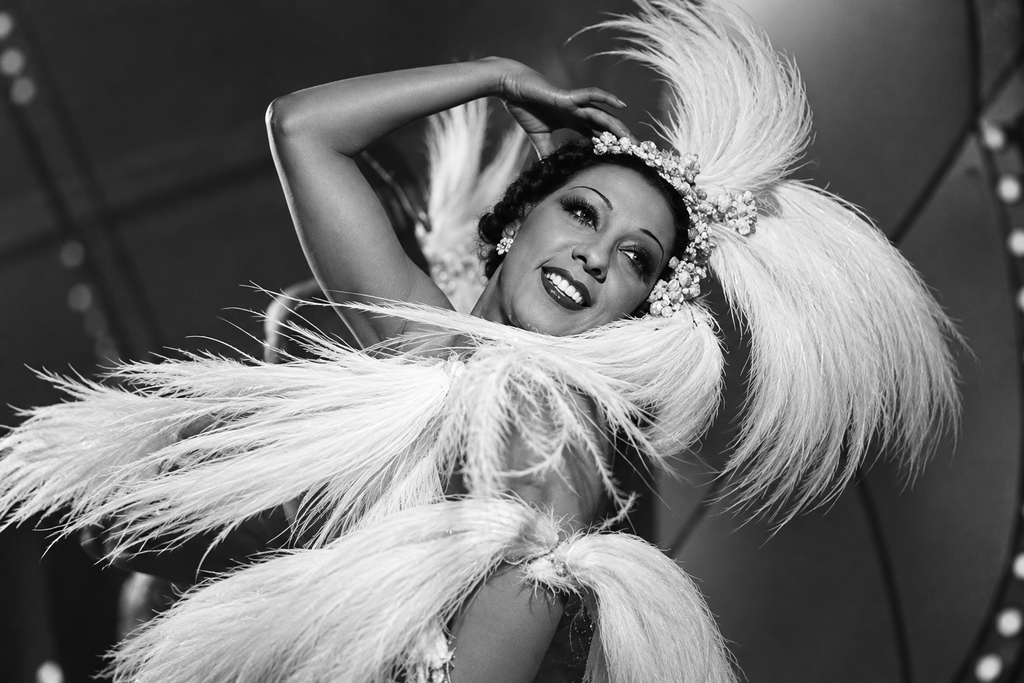

Josephine Baker was far more than the glamorous dancer remembered for her famous banana-skirt performances. Born Freda Josephine McDonald in St. Louis in 1906, she became an international entertainer, actress, singer, French Resistance operative and civil rights activist. The Smithsonian describes her as one of the most important performers of the 20th century and notes that she found international fame after moving to France.
For many people, the first image that comes to mind is Baker dancing in Paris during the Jazz Age. Others know her because of her remarkable wartime activities, her adopted family known as the “Rainbow Tribe,” or her involvement in the American civil rights movement.
Her life connected worlds that rarely appeared together: entertainment, international celebrity, wartime intelligence, racial equality and family. She also deliberately challenged expectations about what a Black American performer could achieve in Europe and the United States.
This guide explores who Josephine Baker was, her children, famous banana-skirt performances, marriages, spy work, career, death and the legacy that continues to make her name relevant today.
Who Was Josephine Baker?
Josephine Baker was an American-born dancer, singer and actress who became a major star in France.
She was born on June 3, 1906, in St. Louis, Missouri, and grew up in a low-income family. The National Park Service records that she began working as a child and later developed her talents as a performer.
Her early life was shaped by poverty and racial discrimination. Those experiences became important to the person she later became.
As a young performer, Baker worked in vaudeville and eventually traveled to New York. Her career took a dramatic turn when she moved to Paris and joined La Revue Nègre in 1925.
Paris gave Baker an opportunity to develop an international career that would have been much more difficult to achieve in the segregated United States of that era.
Josephine Baker’s Rise to Fame
Baker arrived in Paris during a period when French audiences were fascinated by American jazz and Black American performers.
Her appearance in La Revue Nègre quickly attracted attention.
She became known for:
- Her energetic dancing
- Her distinctive stage personality
- Her comedic timing
- Her innovative costumes
- Her singing
- Her ability to command a large audience
The Smithsonian notes that Baker became one of the first African American entertainers to achieve major acclaim in both film and stage performance.
Her fame expanded beyond France. She became an international celebrity whose image appeared in posters, illustrations, photographs and advertisements.
Baker as a Film Actress
Baker also worked in cinema.
The Smithsonian identifies her as the first African American woman to star in a motion picture.
Her screen career was not as extensive as her stage career, but her appearance in early European films helped establish her as a recognizable international entertainment figure.
Josephine Baker and the Famous Banana Skirt
The Josephine Baker banana skirt is probably the single most recognizable costume associated with her career.
During her Paris performances in the 1920s, Baker developed an instantly recognizable stage image. One of the most famous versions showed her wearing a costume made from artificial bananas.
The image became closely connected with the visual culture of Jazz Age Paris.
The Smithsonian’s National Portrait Gallery catalog includes Paul Colin’s 1927 work Le Tumulte Noir/Josephine Baker in a Banana Skirt.
That artwork demonstrates how quickly Baker’s stage appearance became part of popular visual culture.
Why Was the Banana Skirt So Famous?
The costume was memorable because it combined several elements:
- Movement
- Humor
- Exoticized stage imagery
- Jazz-era fashion
- Baker’s distinctive dancing style
- A deliberately theatrical performance persona
It became an iconographic image rather than simply a piece of clothing.
Today, photographs and artwork showing Baker in banana costumes are frequently reproduced when people discuss the 1920s, Parisian nightlife, jazz culture and the history of modern dance.
Josephine Baker’s Dancing Style
Baker’s dancing was energetic, theatrical and intentionally unconventional.
Her performances often combined comedy with highly physical movement. She used exaggerated facial expressions and rapid choreography to create a stage personality that was immediately recognizable.
Her performances also challenged conventional expectations surrounding Black women in entertainment.
However, Baker’s legacy is complicated. Some of the publicity surrounding her performances relied on European fascination with racial stereotypes and exoticism. At the same time, Baker became an exceptionally successful performer who used that visibility to establish independence and later advocate for racial equality.
Understanding both sides makes her career more meaningful than simply describing her as a famous dancer.
Josephine Baker and the “Nude” Search
Searches for “Josephine Baker nude” are usually connected to historical photographs, artwork and discussions of her early stage image.
Baker’s performances sometimes involved revealing or unconventional costumes, and artists of the period frequently portrayed her in stylized ways.
The Smithsonian National Portrait Gallery’s collection includes several historical works connected with Baker, including Paul Colin’s Le Tumulte Noir prints from the 1920s.
These materials are best understood in their historical context. Baker’s public image was deliberately theatrical, and contemporary artists often emphasized her costume, movement and physicality.
Her significance, however, goes far beyond the provocative imagery associated with her early performances.
Josephine Baker’s Children
One of the most unusual parts of Baker’s personal life was her decision to adopt children from different countries and backgrounds.
She raised what became known as her “Rainbow Tribe.” The Smithsonian describes her as taking time away from entertainment to raise this family before eventually returning to the stage.
The children came from different ethnic and national backgrounds, reflecting Baker’s belief that people from different cultures could form a family.
This became closely connected to her views about racial equality and international understanding.
How Many Children Did Josephine Baker Have?
Baker is widely associated with a family of 12 adopted children.
Rather than having a traditional celebrity family built around biological children, she deliberately created a multicultural household.
Her family became part of her public message: that children from different racial and cultural backgrounds could grow up together as brothers and sisters.
The “Rainbow Tribe” was therefore not merely a family arrangement. It was also connected to Baker’s broader ideas about race, identity and human equality.
Josephine Baker’s Children Today
Because Baker died in 1975, her children are now adults and have lived their own lives away from the stage.
Information about individual members of the family varies, and not every detail found online is equally well documented. For that reason, it is better to avoid repeating unverified claims about their current private lives.
One of Baker’s sons, Jean-Claude Baker, later became an author and was involved in preserving and discussing aspects of his mother’s story. The Smithsonian’s collection includes material donated by him.
Josephine Baker as a Spy
Perhaps the most surprising part of Baker’s biography is her involvement with the French Resistance during World War II.
When Germany went to war with France, Baker used her celebrity status to support the French cause.
The CIA’s historical account states that French counterintelligence officer Jacques Abtey recruited Baker to assist the Resistance. Her celebrity allowed her to move through diplomatic and social circles where she could gather information.
This was not simply a case of a celebrity publicly supporting the war effort.
Baker actually participated in intelligence-related activities.
How Did Josephine Baker Spy?
Baker’s fame gave her an unusual advantage.
She could attend events involving diplomats and officials without necessarily appearing suspicious. According to the CIA’s historical account, she gathered information concerning enemy military movements and facilities.
She also carried sensitive information.
One particularly remarkable detail is that intelligence was reportedly written in invisible ink on her sheet music.
Her work continued after she left France, including activity connected with Allied intelligence efforts in North Africa.
Was Josephine Baker Really a Spy?
Yes, although “spy” is a simplified description of a more complicated wartime intelligence role.
The CIA documents her involvement with French counterintelligence and the Resistance, while the Smithsonian describes her as having served with French Resistance forces and receiving the Croix de Guerre.
After the war, Baker was recognized by France for her service.
Her wartime story is particularly remarkable because it contrasted so strongly with her public image as a glamorous entertainer.
Josephine Baker’s Military Honors
Baker’s wartime activities were formally recognized.
According to the CIA’s historical account, Charles de Gaulle awarded her the Croix de Guerre, the Rosette de la Résistance, and the Légion d’Honneur.
These honors provide important context when discussing her as a wartime figure.
She was not simply an entertainer who supported soldiers through performances. Her contribution to the French war effort extended into intelligence and Resistance activities.
Josephine Baker and Civil Rights
After World War II, Baker continued to challenge racial discrimination.
She refused to perform for segregated audiences in the United States and used her international fame to draw attention to racial inequality.
The National Park Service notes that Baker became an important civil rights activist and participated in the 1963 March on Washington for Jobs and Freedom.
The Smithsonian similarly documents her activism and her participation in the American Civil Rights Movement.
Why Was Her Civil Rights Work Important?
Baker had experienced discrimination personally despite achieving enormous international fame.
That gave her an unusual perspective.
She had performed for European audiences and entered prestigious social circles abroad, yet racial segregation could still restrict her access to hotels and public facilities in the United States.
She used her celebrity to challenge those contradictions.
Josephine Baker’s Spouses
Baker was married several times during her life.
Her first marriage was to Willie Wells, and she later married William Baker, whose surname she continued to use professionally.
She subsequently had other marriages, including relationships with Jean Lion and Jo Bouillon.
Her personal relationships have generated considerable interest, but they were only one part of a much larger life story.
Her fourth husband, Jo Bouillon, was closely involved with Baker’s family and the household she created with her adopted children.
Josephine Baker’s Later Career
Baker’s career did not end when she stepped away from the spotlight to focus on her family.
She eventually returned to performing.
The Smithsonian records that after spending time raising her “Rainbow Tribe,” she returned to the stage for concerts at Paris’s Bobino Theater.
Her return demonstrated that her audience had not forgotten her.
She remained an international cultural figure decades after her breakthrough in 1920s Paris.
Josephine Baker’s Last Performance
Baker’s final period on stage was particularly significant because it became a celebration of her long career.
In April 1975, she performed in Paris in a production celebrating her 50 years in show business.
The performances received strong attention, but Baker died only days later.
The Smithsonian states that after the successful show, she went to sleep and later slipped into a coma. She died on April 12, 1975, at age 68.
How Did Josephine Baker Die?
Josephine Baker died on April 12, 1975, at the age of 68.
The Smithsonian reports that she slipped into a coma while sleeping after her successful Paris performances.
The National Park Service likewise records her death on April 12, 1975, at age 68.
Her death came at the end of an extraordinary period in which she had returned to the stage and celebrated half a century in entertainment.
Josephine Baker’s Last Photos
There are photographs of Baker from her later years, including images associated with her performances and public appearances.
The Smithsonian National Portrait Gallery’s collection includes a 1975 print of Josephine Baker at Bobino, the Paris theater where she performed during her final stage engagement.
These later photographs are historically interesting because they show Baker near the end of a career that had begun half a century earlier.
Rather than viewing a “last photo” as a single definitive image, it is more accurate to think of several documented photographs from the final period of her life.
Josephine Baker’s Color Photos
Most people first encounter Baker through black-and-white photographs, posters and artwork from the 1920s and 1930s.
However, color photography also exists from later periods of her life.
The availability of color images is especially interesting because Baker’s career stretched across major changes in photographic technology.
Her visual legacy therefore includes:
- Early black-and-white portraits
- Stage photographs
- Color photographs from later decades
- Illustrated posters
- Paintings and drawings
- Promotional material
The Smithsonian’s extensive collections preserve many different forms of Baker’s visual record.
Josephine Baker Facts Worth Knowing
Here are several important facts that summarize her life:
- Born: June 3, 1906
- Birthplace: St. Louis, Missouri
- Birth name: Freda Josephine McDonald
- Profession: Dancer, singer and actress
- Major breakthrough: Paris in the 1920s
- Famous performance: Banana-skirt routine
- World War II role: French Resistance intelligence work
- Civil rights role: Anti-segregation activist
- Children: 12 adopted children, known collectively as the “Rainbow Tribe”
- French honors: Including the Croix de Guerre and Légion d’Honneur
- Died: April 12, 1975
- Age at death: 68
The major institutions documenting her life consistently emphasize that her significance extended beyond entertainment into wartime service and civil rights activism.
Three Overlooked Insights About Josephine Baker
Her celebrity was part of her wartime usefulness
Baker’s glamorous public identity was not simply separate from her wartime activities. It could actually help her move through social environments where military intelligence might be exchanged.
Her fame became a form of cover.
Her family was connected to her worldview
The Rainbow Tribe was not just an unusual celebrity household. Baker used her multicultural family to express her belief that racial and national divisions were not barriers to family and community.
Her image changed dramatically over time
Early Baker imagery often focused on dance, costume and spectacle. Later representations increasingly emphasized her wartime service, civil rights activism and humanitarian identity.
The Smithsonian’s exhibition history reflects this evolution from Jazz Age performer to international activist.
Frequently Asked Questions
Who was Josephine Baker?
Josephine Baker was an American-born dancer, singer and actress who became internationally famous after moving to France. She later served with the French Resistance during World War II and became a prominent civil rights activist. She died in Paris in 1975 at age 68.
How many children did Josephine Baker have?
Josephine Baker is widely associated with 12 adopted children, whom she called her “Rainbow Tribe.” She raised children from different cultural and national backgrounds as part of her family. The Smithsonian documents this period of her life and describes her return to entertainment after raising the family.
Why did Josephine Baker wear a banana skirt?
The banana skirt became one of the defining visual symbols of Baker’s 1920s Paris performances. It was part of the theatrical, highly stylized image she developed during her rise to fame. The Smithsonian National Portrait Gallery preserves a 1927 Paul Colin work specifically depicting Baker in a banana skirt.
Was Josephine Baker a spy?
Josephine Baker worked with French intelligence and the Resistance during World War II. Her celebrity allowed her to move through social and diplomatic circles while collecting information, and historical accounts document her role in transporting intelligence. She was later honored by France for her wartime service.
How did Josephine Baker die?
Josephine Baker died on April 12, 1975, at age 68. The Smithsonian states that after her successful return to the stage at Paris’s Bobino Theater, she went to sleep and later slipped into a coma.
What made Josephine Baker famous?
Baker became famous through her dancing, singing and stage performances, particularly after her move to Paris in the 1920s. Her banana-skirt performances became iconic, but her later reputation expanded through her wartime Resistance work and civil rights activism.
Conclusion
Josephine Baker’s story is much larger than the famous banana skirt.
She began life in St. Louis, escaped poverty through performance, became a major star in Paris, worked with the French Resistance during World War II, raised a multicultural adopted family and fought racial discrimination.
Her banana-skirt performances made her an icon of the Jazz Age, but her wartime intelligence work and civil rights activism gave her legacy an entirely different dimension.
Baker died in 1975 at 68, shortly after returning triumphantly to the Paris stage. Today, major institutions such as the Smithsonian and National Park Service continue to preserve her story because she crossed so many boundaries at once: performer and activist, American and French, entertainer and wartime participant.
That combination is what makes Josephine Baker’s life still worth studying decades after her final performance.